


Beyond the 2250 kVA Generator Price: The Smart Power Solution for Modern Businesses
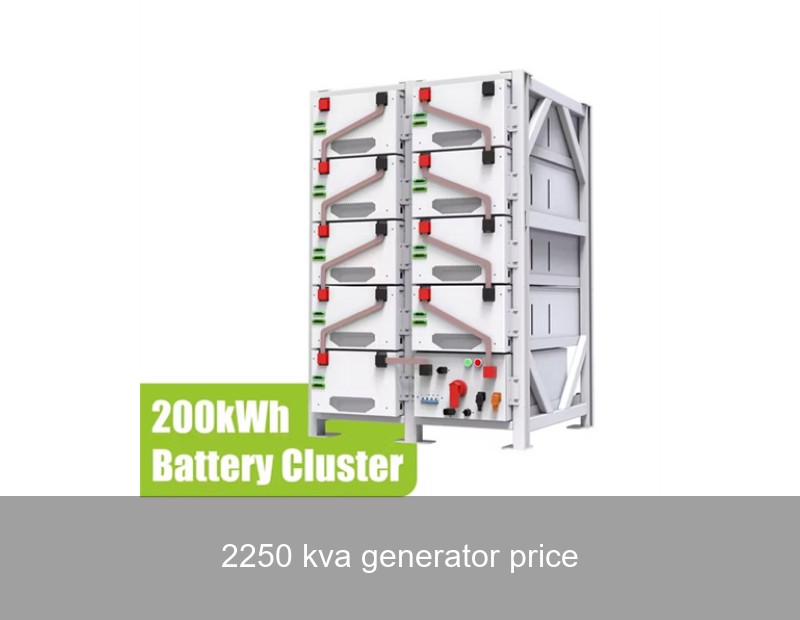
When your business faces a power capacity shortfall, a critical backup need, or a sudden expansion, the immediate thought is often: "We need a big generator." Your search likely begins with terms like "2250 kVA generator price," scouring for quotes on a traditional diesel or gas genset. While this is a common reaction, focusing solely on the upfront capital expenditure (CAPEX) of a 2250 kVA generator can lead you down a path of hidden, long-term operational costs and missed opportunities. The modern energy landscape, driven by volatility in fuel prices and a strong push for sustainability, demands a smarter approach. This article explores why the total cost of ownership and operational intelligence are far more critical than the initial sticker price, and how advanced Battery Energy Storage Systems (BESS) are redefining reliable power.
Table of Contents
- The True Cost Phenomenon: More Than a Price Tag
- Data Fueling the Shift: OpEx vs. CapEx
- Case Study: A European Logistics Hub's Transformation
- The Hybrid Power Architecture: Intelligence Over Inertia
- The Highjoule Solution: Engineered for Performance and Sustainability
- What Does Your Energy Future Look Like?
The True Cost Phenomenon: More Than a Price Tag
So, you've received a quote for a 2250 kVA diesel generator. The figure might seem manageable, perhaps in the range of $200,000 to $500,000 depending on specifications and brand. It's a tangible asset, a known technology. But here's the catch: that price is just the entry fee. The real financial journey begins after installation. We're talking about continuous fuel consumption (especially painful during price spikes), stringent emission compliance costs, regular maintenance contracts, and potential fines for noise or pollution. A large generator running for extended periods during an outage or for peak shaving can consume thousands of dollars in fuel per day. Furthermore, it often sits idle 95% of the time, representing a significant stranded capital asset. This traditional model is reactive, often inefficient, and increasingly at odds with corporate carbon reduction goals.
Data Fueling the Shift: OpEx vs. CapEx
Let's look at the numbers. According to the U.S. Energy Information Administration (EIA), commercial electricity prices and diesel fuel costs have shown significant volatility over the past decade[1]. For a business running a 2250 kVA generator at 80% load for 100 hours a month, the monthly fuel bill can easily exceed $15,000, not including maintenance. In contrast, the levelized cost of energy from solar-plus-storage has plummeted by over 80% in the last ten years. The financial logic is shifting from high upfront CAPEX (generator + infinite fuel) to a more predictable, technology-driven operational expenditure (OpEx) model.
Consider this comparison table for a typical 1800 kW (aligned with 2250 kVA capacity) need:
| Consideration | Traditional 2250 kVA Diesel Genset | Highjoule Advanced BESS (e.g., HJ Cube-2000) |
|---|---|---|
| Primary Cost Driver | Fuel consumption & maintenance | Initial technology investment |
| Response Time | Seconds to minutes | Milliseconds |
| Operating Noise | >85 dB (requires acoustic housing) | Near silent |
| Emissions | High (CO2, NOx, particulate) | Zero on-site emissions |
| Grid Services Revenue | None | Possible (frequency regulation, demand response) |
| Lifespan & Degradation | Long engine life, but frequent part replacements | 10-15+ year design life with predictable capacity fade |

Image: A modern industrial site combining solar generation and containerized battery storage. Credit: Unsplash.
Case Study: A European Logistics Hub's Transformation
Let's examine a real-world scenario. A major logistics company in the Netherlands operated a 2000 kVA diesel generator for peak shaving and backup at its automated distribution center. Facing rising carbon taxes and unpredictable diesel costs, they sought an alternative. In partnership with Highjoule, a solution was deployed: a 2 MWh Highjoule HJ Cube battery storage system integrated with their existing onsite solar PV and a much smaller 800 kVA natural gas generator as a long-duration backup.
The results over the first 18 months were compelling:
- Fuel Savings: Diesel usage reduced by 94%, saving approximately €125,000 annually.
- Peak Demand Charges: The BESS automatically discharged during grid peak periods, cutting peak demand charges by 22%.
- Carbon Footprint: On-site CO2 emissions from backup power were reduced by over 140 tonnes per year.
- Reliability: The system's sub-20ms switchover time provided even better power quality for sensitive automation equipment than the former diesel genset.
This case illustrates the paradigm shift: instead of a single, expensive asset (the 2250 kVA generator), a smarter, integrated system provided greater resilience, cost savings, and sustainability. The focus moved from "generator price" to "total system value."
The Hybrid Power Architecture: Intelligence Over Inertia
The future of commercial and industrial power is hybrid and intelligent. The most resilient and economical systems often combine multiple resources:
- Grid Connection: The primary source, used intelligently.
- On-site Renewable Generation: Solar PV to provide low-cost, clean energy.
- Advanced Battery Storage (BESS): The heart of the modern system. It stores cheap/renewable energy, provides instantaneous backup, manages peak loads, and can even generate revenue.
- A Smaller, Efficient Generator: For extended outages, a smaller, optimally sized generator can be paired with the BESS, running only when necessary and at its most efficient operating point.
This architecture is managed by a sophisticated Energy Management System (EMS)—the brain that decides the most economical and reliable way to meet power needs every second of the day. This is where Highjoule's expertise becomes critical.
The Highjoule Solution: Engineered for Performance and Sustainability
As a global leader in advanced energy storage since 2005, Highjoule doesn't just sell batteries; we deliver intelligent, turnkey power resilience solutions. For businesses considering a 2250 kVA generator, we offer a future-proof alternative or complement.
Our flagship product for commercial and industrial applications, the HJ Cube, is a containerized, all-in-one BESS. Scalable from 500 kWh to multi-MWh configurations, a single HJ Cube can seamlessly replace or augment the need for a large traditional genset. What sets it apart?
- Ultra-Fast Response: Provides backup power in milliseconds, far surpassing the grid code requirements and protecting sensitive processes.
- Highjoule A.I. EMS: Our proprietary software continuously learns your energy patterns, optimizing for cost, carbon, and reliability. It can perform peak shaving, time-of-use arbitrage, and participate in grid-balancing programs where available.
- Unmatched Safety: Built with Lithium Iron Phosphate (LFP) chemistry, known for its thermal stability and long cycle life, and housed in a robust, self-climate-controlled enclosure.
- Seamless Integration: Our systems are designed to integrate with your existing infrastructure—whether it's solar PV, wind, legacy generators, or the grid.
For microgrid and large-scale industrial applications, our HJ Megapack series offers utility-grade storage in a pre-assembled format, dramatically reducing installation time and complexity. By choosing Highjoule, you're not just buying a product; you're gaining a partnership for long-term energy intelligence and sustainability.

Image: An engineer monitoring a sophisticated energy storage control system. Credit: Unsplash.
What Does Your Energy Future Look Like?
The question is no longer "What is the 2250 kVA generator price?" but rather "What is the most intelligent, resilient, and cost-effective way to meet my power needs for the next 15 years?" The energy market's volatility and the imperative for sustainability make this a strategic business decision, not just a facilities purchase.
Is your organization ready to analyze your true cost of backup power, explore potential savings from peak shaving, and build a power infrastructure that aligns with both your financial and environmental goals? The first step is to look beyond the traditional quote.
What specific energy challenge is driving your search for a large generator today, and have you considered how an intelligent storage system could transform that challenge into an opportunity for savings and leadership?
 Inquiry
 Online Chat