


Understanding the 200Ah Battery Price in Uganda: A Guide to Smart Energy Storage
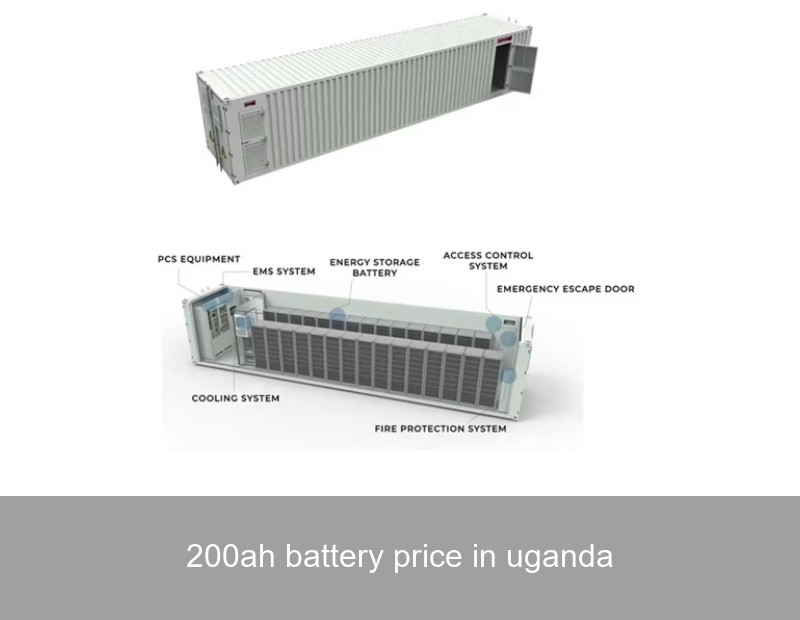
If you're researching energy solutions in East Africa, you've likely encountered the search term "200Ah battery price in Uganda." On the surface, this seems like a simple query for a product cost. But dig a little deeper, and it reveals a much larger story about Uganda's energy journey, the quest for reliable power, and the critical importance of choosing the right storage technology. The price tag is just the beginning; the real value lies in the battery's performance, lifespan, and its integration into a complete, intelligent system. This is where moving beyond basic price comparison to understanding quality and system design becomes paramount for sustainable power.
Table of Contents
- The Real Question Behind the Price Tag
- Battery Technology Showdown: What Does 200Ah Really Mean?
- Uganda's Energy Context: More Than Just a Number
- Case Study: A Kampala Business's Transformation
- The Highjoule Approach: Beyond the Battery Box
- Investing Wisely in Your Energy Future
The Real Question Behind the Price Tag
When a business owner, farmer, or homeowner in Uganda looks up "200Ah battery price," they're not just shopping for a component. They are seeking a solution to a fundamental challenge: energy reliability. Perhaps they face frequent grid outages that disrupt a cold storage facility, or they want to maximize solar investment for a remote clinic. The initial purchase price of a lead-acid battery might seem attractive, but the total cost of ownership—including replacement cycles, maintenance, and depth of discharge—often tells a different story. The key is to ask: "What is the cost of reliable, usable energy over the next 10 years?"
Battery Technology Showdown: What Does 200Ah Really Mean?
The Amp-hour (Ah) rating indicates a battery's capacity, but it doesn't tell you about its endurance or intelligence. Let's compare the two main technologies you'll encounter.
| Feature | Traditional Flooded Lead-Acid (FLA) | Advanced Lithium-Ion (LiFePO4) |
|---|---|---|
| Typical Depth of Discharge (DoD) | ~50% (Only 100Ah of a 200Ah battery is safely usable) | ~90% (Up to 180Ah of a 200Ah battery is safely usable) |
| Cycle Life (to 80% capacity) | 300 - 500 cycles | 3,500 - 6,000+ cycles |
| Approximate Lifespan | 1.5 - 3 years | 10+ years |
| Maintenance | High (Regular watering, ventilation) | Virtually none |
As you can see, a lithium-ion (specifically Lithium Iron Phosphate or LiFePO4) battery with a 200Ah label delivers significantly more usable energy over a vastly longer lifetime. While its upfront "200Ah battery price in Uganda" might be higher, the levelized cost of energy stored becomes far lower. This technological leap is why global leaders like Highjoule have pivoted entirely to intelligent LiFePO4-based systems. Our Highjoule H-series commercial storage systems are engineered not just for capacity, but for resilience, featuring built-in Battery Management Systems (BMS) that protect every cell and communicate with inverters for optimal performance.
Uganda's Energy Context: More Than Just a Number
Uganda presents a unique energy landscape. While grid access is expanding, reliability can be a concern, and for many off-grid or rural areas, solar-plus-storage is the primary power source. According to the International Energy Agency (IEA), Uganda has made significant strides in electrification, yet ensuring consistent, quality power for economic activity remains a focus. This is where robust energy storage steps in, acting as a bridge between intermittent supply (solar or grid) and constant demand.
Think of it this way: a battery is the heart of your power system, but it needs a brain. A standalone battery, without intelligent management, is like a powerful engine without a skilled driver. It might work, but it will be inefficient and prone to failure. This is precisely the gap that holistic system providers address.

Credit: A solar-plus-storage installation at a rural site. The value lies in the seamless integration of all components.
Case Study: A Kampala Business's Transformation
Let's look at a real-world example. A medium-sized poultry processing plant on the outskirts of Kampala was facing 4-6 hour daily grid outages. Their cold storage and processing lines were constantly interrupted, leading to product spoilage and lost revenue. They initially installed a 24kWh system using 12V 200Ah lead-acid batteries.
- Phenomenon: Frequent outages threatened business continuity.
- Data: The lead-acid bank required full replacement after 2 years at a significant cost. Due to the 50% DoD limit, only 12kWh was reliably usable.
- Case: In 2022, they upgraded to a Highjoule HI-Stack 25 modular lithium system. With a 25kWh capacity and 90% DoD, it provides over 22kWh of usable energy. The system's integrated energy management automatically switches between grid, solar, and battery to prioritize solar consumption and ensure the cold storage never loses power.
- Insight: After two years, the lithium system shows zero degradation in performance. The business has eliminated diesel generator use, reduced energy costs by 40%, and secured their operations. The higher initial investment was recouped in under 3 years through savings and avoided replacement costs.
The Highjoule Approach: Beyond the Battery Box
At Highjoule, we view the "200Ah battery price" as one line item in a comprehensive energy resilience plan. Since 2005, we've evolved from a component supplier to a global provider of intelligent, integrated storage solutions. For markets like Uganda, we don't just ship products; we deliver certified, weather-resistant, plug-and-play power stations designed for harsh climates.
Our Residential Energy Hub and Commercial & Industrial (C&I) Power Stack solutions come pre-configured with Highjoule's proprietary management software. This system doesn't just store energy; it learns your consumption patterns, integrates with local solar arrays, and can be monitored and controlled remotely via a smartphone app. This level of intelligence ensures you extract every bit of value from your investment, making the conversation about total lifetime value, not just upfront cost.
For larger-scale needs, such as microgrids for agricultural cooperatives or rural healthcare facilities, our engineering team provides custom design and long-term performance monitoring. We partner with trusted local installers across key regions, ensuring proper installation and service, which is as critical as the product itself. You can learn more about system design principles from resources like the U.S. Department of Energy's Solar Integration Guide.

Credit: Modern, wall-mounted battery storage systems with digital monitoring provide clarity and control.
Investing Wisely in Your Energy Future
So, how should you proceed when evaluating your storage options in Uganda?
- Audit Your Needs: Calculate your essential load in watts and required backup hours. A qualified installer can help.
- Think in Usable kWh: Demand clarity on the Depth of Discharge. A 200Ah, 24V lithium (LiFePO4) system offers ~4.3kWh usable energy, often outperforming a much larger lead-acid bank.
- Demand System Intelligence: Ask about the Battery Management System (BMS), compatibility with inverters, and monitoring capabilities.
- Partner with Experts: Choose a provider with proven expertise in system design, not just component sales. Look for providers with strong references and service networks.
Highjoule's solutions are built on this philosophy. We provide the technology that turns a simple battery into a smart, grid-interactive asset. As the International Renewable Energy Agency (IRENA) notes, system integration and smart controls are key to the future of renewable energy.
Your Next Step
As you continue your research on securing reliable power, what specific challenge in your home or business—be it preserving vaccines, running irrigation, or keeping servers online—would be most transformed by having an intelligent, uninterrupted energy supply for the next decade?
 Inquiry
 Online Chat