


Unlocking Energy Freedom: Your Guide to the 12V Hybrid Solar Inverter
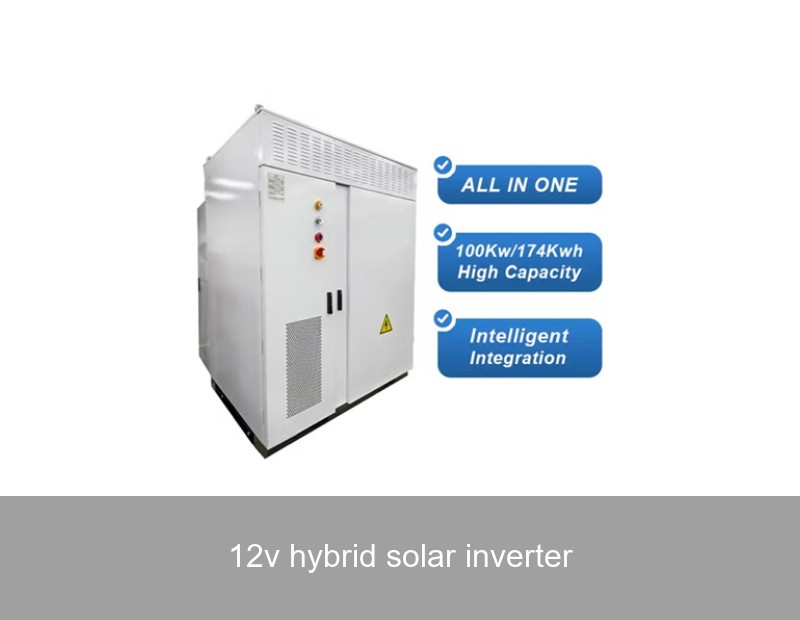
the sun is shining, your solar panels are humming, and your home is running smoothly. Then, clouds roll in, or night falls. In a traditional setup, you'd instantly switch back to the grid. But what if your power supply didn't skip a beat? This seamless, resilient energy experience is the core promise of a 12v hybrid solar inverter. For homeowners, RV enthusiasts, and small business owners across Europe and the US, this technology is becoming the cornerstone of modern, intelligent energy independence. It's more than just a component; it's the brain of a system that intelligently juggles solar power, battery storage, and the grid to keep your lights on, your costs down, and your carbon footprint lighter.
The Power Behind Independence: Why a Hybrid System Shines
The "hybrid" in 12v hybrid solar inverter is the key. Unlike a standard solar inverter that only converts solar DC power to AC for immediate use, a hybrid inverter does that and manages battery storage. Think of it as a sophisticated energy conductor. It makes real-time decisions: directing surplus solar energy to charge your battery bank, powering your loads from the batteries when solar is insufficient, and only pulling from the grid as a last resort or when strategically advantageous (like during low off-peak rates).
This intelligence translates to tangible benefits. For our European readers facing volatile energy prices, and for our US audience in areas prone to grid instability, the value is clear:
- Maximized Self-Consumption: Use more of the solar energy you produce, sometimes boosting self-consumption rates to over 70%, dramatically reducing electricity bills.
- Uninterrupted Power Supply (UPS): During a grid outage, the system can island itself and provide backup power from the batteries in milliseconds—a critical feature for home offices, medical devices, or simply peace of mind.
- Future-Proofing: A hybrid system is ready for expansion. Start with a smaller battery bank and add more capacity as your needs or budget grow.

Image source: Unsplash. A modern hybrid inverter acts as the command center for your energy ecosystem.
The 12V Advantage: Where It Fits Perfectly
Why 12V? This voltage class is the sweet spot for smaller-scale, off-grid, and mobile applications. It's the backbone of caravans, boats, remote cabins, sheds, and essential backup systems for critical loads in homes. Systems built around a 12v hybrid solar inverter are typically more cost-effective for energy needs up to 2-3 kWh per day. They pair perfectly with common 12V deep-cycle lead-acid or lithium iron phosphate (LiFePO4) batteries, offering a robust and manageable solution for getting started with energy independence.
Key Features to Consider in a 12V Hybrid Inverter
Not all hybrid inverters are created equal. When evaluating a 12v hybrid solar inverter, look beyond the basic specs. Here’s what truly matters for performance and longevity:
| Feature | Why It Matters | Professional Tip |
|---|---|---|
| Pure Sine Wave Output | Ensures clean, stable power identical to the grid. Essential for sensitive electronics like laptops, tools, and medical equipment. | Never compromise on this. Modified sine wave inverters can damage modern electronics. |
| Battery Chemistry Compatibility | Must support your chosen battery type (e.g., Gel, AGM, Lithium). Advanced lithium compatibility with built-in BMS communication is a game-changer for efficiency and battery life. | Lithium (LiFePO4) batteries offer longer lifespan, deeper discharge cycles, and require less maintenance, making them a superior long-term investment. |
| Solar Charger MPPT Rating | The Maximum Power Point Tracker efficiency determines how much solar energy you harvest. Look for high MPPT efficiency (>98%). | An undersized solar charger will waste panel capacity. Ensure the inverter's PV input voltage and current match your solar array. |
| Grid Charging & Programmable Logic | Allows the inverter to charge batteries from the grid intelligently, e.g., during cheap off-peak tariffs, preparing for a potential outage or a sunny-less day. | This feature turns your system into a financial tool, leveraging time-of-use electricity rates common in Europe and many US states. |
A Real-World Case Study: Off-Grid Living in Scandinavia
Let's move from theory to practice. Consider the case of a small, off-grid holiday cabin in the forests of Norway. The owner's goal was to achieve full energy autonomy for weekend use year-round, despite limited winter sunlight.
- Challenge: Power essential loads (LED lighting, water pump, refrigerator, occasional small TV/laptop) without any grid connection. Harsh winters reduced solar yield.
- Solution: A system centered on a robust 12v hybrid solar inverter with a high-efficiency MPPT charger. It was paired with 800W of solar panels and a 5kWh LiFePO4 battery bank.
- Outcome & Data: Over one year, the system met 100% of the cabin's energy needs. Data logging showed that even in December, with only 4 hours of effective sunlight, the hybrid inverter's intelligent management ensured the battery was fully charged by midday on clear days, prioritizing solar intake and critically managing discharge. The system's round-trip efficiency (solar to usable AC power) averaged 92%. The owner reported zero power interruptions and eliminated the need for a noisy, polluting gasoline generator, which was previously used 30% of the time in winter (U.S. Department of Energy).
This case highlights how the right 12v hybrid solar inverter isn't just about conversion; it's about sophisticated energy budgeting and resilience.
Highjoule: Your Partner in Intelligent Power Management
At Highjoule, with nearly two decades of experience since 2005, we understand that energy solutions are not one-size-fits-all. The principles of resilience, efficiency, and intelligence that define a great 12v hybrid solar inverter are the same principles that guide our product development. While our commercial and industrial solutions operate at much larger scales, the core technology philosophy trickles down.
For enthusiasts and professionals building robust off-grid or backup systems, we offer advanced battery management technologies and system design insights. Our expertise in integrating diverse energy sources into a reliable microgrid directly informs what's possible at the 12V scale. We see the 12v hybrid solar inverter as a critical entry point into a more sustainable and secure energy lifestyle, and we are committed to advancing the components, like our high-efficiency LiFePO4 battery modules, that make these systems last longer and perform better.

Image source: Unsplash. Scalable energy intelligence: from residential hybrids to industrial storage.
Choosing the Right System for Your Needs
Ready to explore if a 12v hybrid solar inverter system is right for you? Start by asking these key questions:
- What are my critical loads? (List the wattage and estimated daily run time of essential appliances).
- What is my daily energy consumption? (in watt-hours). This will dictate your battery bank size.
- What are my solar resources? (Average sun hours in your location, available roof or ground space for panels).
- Is my primary goal bill savings, backup power, or complete off-grid independence?
Answering these will clarify whether a 12V system suffices or if you need to step up to a 24V or 48V system for higher power demands. Remember, proper design is crucial. Resources like the NREL PVWatts Calculator can help estimate solar production, but consulting with a qualified installer is always recommended for a safe and optimized system.
The Future is Integrated and Smart
The evolution of the 12v hybrid solar inverter is moving towards deeper connectivity and smarter grid interaction. Imagine an inverter that not only manages your solar and battery but also responds to grid signals, participating in virtual power plants or dynamically adjusting its operation based on real-time weather forecasts. This level of integration is where the industry, led by providers focused on system-wide intelligence like Highjoule, is headed. It transforms a standalone power unit into an active node in a cleaner, more resilient energy network.
So, as you consider taking control of your power, what will be the first load you want to secure with your own intelligent energy system?
 Inquiry
 Online Chat