


Understanding the 120A MPPT Charge Controller: Maximizing Your Solar Harvest
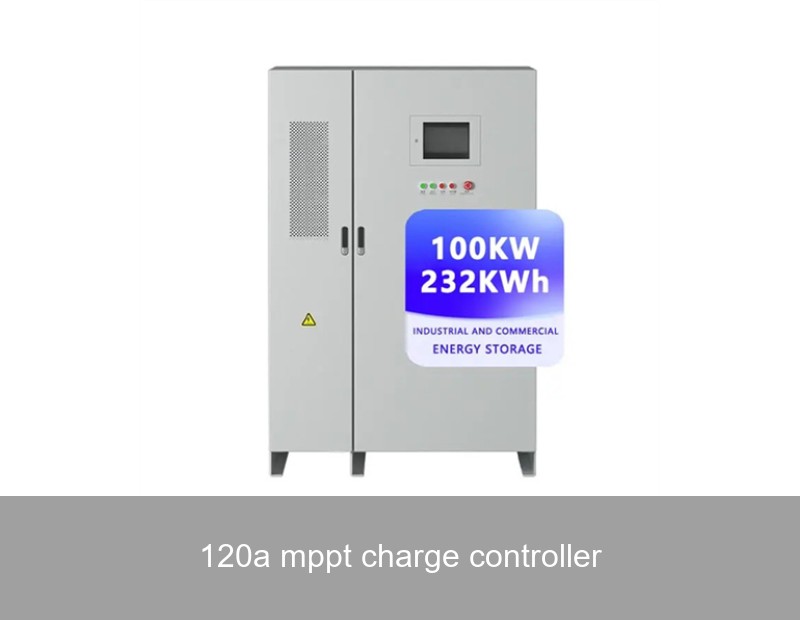
Have you ever looked at your solar panels on a cloudy day and wondered if you're truly getting all the power you paid for? You're not alone. For system owners and installers across Europe and the US, squeezing every possible watt from a solar array is the ultimate goal. This is where the technology behind a 120A MPPT charge controller becomes critical. It's not just a component; it's the intelligent brain of your off-grid or hybrid energy system, ensuring your batteries are charged efficiently and safely. In this deep dive, we'll explore why this specific capacity is a sweet spot for many applications and how choosing the right one can dramatically impact your energy independence.
Table of Contents
- What is an MPPT Charge Controller & Why 120A?
- The Efficiency Phenomenon: Voltage, Current, and Lost Watts
- The Data: How a 120A MPPT Boosts Your ROI
- Real-World Case Study: A German Farm's Transformation
- Highjoule's Smart Energy Solution
- Choosing the Right Controller for Your System
- The Future of Charge Control
What is an MPPT Charge Controller & Why 120A?
Let's break it down. MPPT stands for Maximum Power Point Tracking. Unlike simpler controllers, an MPPT doesn't just connect panels to batteries. It continuously scans the panel's voltage and current output to find the exact combination (the "maximum power point") that delivers the most wattage at any given moment. It then intelligently converts excess voltage into additional charging current for your battery bank. So, what about the 120A rating? This refers to the maximum output current the controller can send to the batteries. A 120A MPPT charge controller is a robust, high-capacity unit ideally suited for medium to large-scale systems. Think of it as a high-throughput energy manager, capable of handling significant solar array power—typically up to 3kW or more on a 24V battery system, and nearly 6kW on a 48V system. This makes it a perfect fit for large homes, agricultural operations, small commercial sites, and critical backup power systems.
The Efficiency Phenomenon: Voltage, Current, and Lost Watts
The core problem MPPT solves is a fundamental mismatch. Solar panels often operate at a voltage much higher than your battery bank's voltage. With a basic controller, this voltage difference is wasted as heat. Imagine your panels producing 100V at 10A (1000W), but your battery bank is at 24V. A simple controller would force the panel to run at ~24V, causing the current to drop, and you might only get 24V * 10A = 240W. That's a staggering 76% loss! An MPPT controller, however, takes that 1000W, and using its DC-DC conversion magic, delivers it to the battery as 24V at roughly 41.7A (minus a small efficiency loss). That's the game-changer.

Image: A solar array's full potential is only realized with intelligent management. Source: energy.gov
The Data: How a 120A MPPT Boosts Your ROI
The numbers don't lie. According to the National Renewable Energy Laboratory (NREL), advanced power electronics like MPPT controllers can improve overall system energy harvest by 15% to 30% compared to older technologies, depending on climate and temperature variations. For a 6kW commercial system in Southern Europe, a 25% gain translates to an extra 1,500 kWh per year. At an average commercial electricity rate of €0.22/kWh, that's over €330 of additional annual savings, directly improving the payback period of the entire solar installation. The 120A MPPT charge controller is the workhorse that makes capturing these gains possible for larger systems.
Key Performance Advantages:
- Higher Energy Yield: Up to 30% more harvest, especially in cold, cloudy, or variable weather.
- Design Flexibility: Allows you to use higher-voltage panel strings, reducing wire thickness and installation costs over long distances.
- Battery Health & Longevity: Precise multi-stage charging (bulk, absorption, float) extends battery life, a critical factor in total system cost.
Real-World Case Study: A German Farm's Transformation
Let's look at a concrete example from Bavaria, Germany. The Huber family dairy farm operated a 24V battery bank for its automated milking systems and cooling units. Their older 80A PWM controller struggled with their expanded 8kW ground-mounted array, often clipping power on sunny winter days and failing to harvest effectively during long periods of diffuse light.
In 2023, they upgraded to a high-efficiency 120A MPPT charge controller as part of a broader system retrofit. The results were meticulously tracked:
| Metric | Before (PWM) | After (120A MPPT) | Change |
|---|---|---|---|
| Average Daily Harvest (Nov-Feb) | 18.2 kWh | 24.1 kWh | +32% |
| Battery Recharge Time (from 50%) | 6.5 hours | 4.8 hours | -26% |
| Generator Runtime (monthly) | 45 hours | 12 hours | -73% |
"The difference was immediately noticeable, particularly in the shoulder seasons," explained Franz Huber. "Our generator now sits idle most of the time. The new controller paid for itself in diesel savings alone within 18 months." This case highlights the tangible impact of choosing a controller with both the right capacity (120A) and advanced MPPT algorithms.
Highjoule's Smart Energy Solution: The HPC-6120 Controller
At Highjoule, we've engineered our products to address exactly these challenges. Our HPC-6120 120A MPPT Solar Charge Controller is built for reliability and peak performance in demanding environments like the Huber farm. It features our proprietary HyperTrack MPPT algorithm, which boasts a 99.5% tracking efficiency and excels in low-light and rapidly changing conditions—common across both Europe and North America.
But we believe a controller shouldn't work in isolation. The HPC-6120 is a core component of Highjoule's integrated IntelliGrid energy management platform. It seamlessly communicates with our lithium-ion battery systems and hybrid inverters, creating a cohesive ecosystem that can be monitored and optimized via a single cloud-based dashboard. This holistic approach, from a single residential unit to a commercial microgrid, ensures that every asset—solar panels, batteries, the controller itself—works in perfect harmony to deliver maximum resilience and return on investment.

Image: Integrated energy systems require seamless communication between components. Source: Unsplash
Choosing the Right Controller for Your System
So, is a 120A controller right for you? Here’s a simple framework:
- Calculate Your Maximum Solar Current: Divide your total solar array wattage by your battery bank voltage. For a 5,760W array on a 48V battery: 5760W / 48V = 120A. A 120A controller is a precise fit.
- Consider Future Expansion: If you plan to add more panels, consider a controller with a higher current rating or ensure your chosen model can be paralleled.
- Evaluate Environmental Specs: Look for a wide operating temperature range and a high IP rating for dust/water resistance, especially for outdoor installations.
- Prioritize Connectivity: Choose a controller with data logging and remote monitoring capabilities. This is crucial for troubleshooting and performance validation.
The Future of Charge Control: Beyond Basic Charging
The role of the charge controller is evolving. The next generation, as seen in platforms like Highjoule's IntelliGrid, will act as a grid-interactive energy router. Think of dynamic load management—diverting excess solar to heat water or charge an EV only when the battery is full. Or providing grid-stabilizing services in response to utility signals. The International Energy Agency (IEA) emphasizes the need for smarter, more flexible power electronics to integrate high shares of renewables. Your 120A MPPT charge controller is becoming a key node in a much smarter, more responsive energy network.
Your Energy, Optimized
Selecting a charge controller is one of the most technically significant decisions in designing a solar-plus-storage system. It's the difference between a collection of parts and a finely tuned energy-generating asset. As you contemplate your next project, ask yourself: Is my system's brain powerful enough to adapt to every sunrise, cloud, and season, ensuring not a single photon goes to waste?
We invite you to explore how Highjoule's engineered solutions, from our HPC-6120 controller to complete IntelliGrid systems, can be the foundation of your energy resilience. What's the first load you would secure with a truly reliable and efficient power system?
 Inquiry
 Online Chat