


Demystifying the 100 Watt Lithium Battery Price: A Guide to Smart Energy Investment
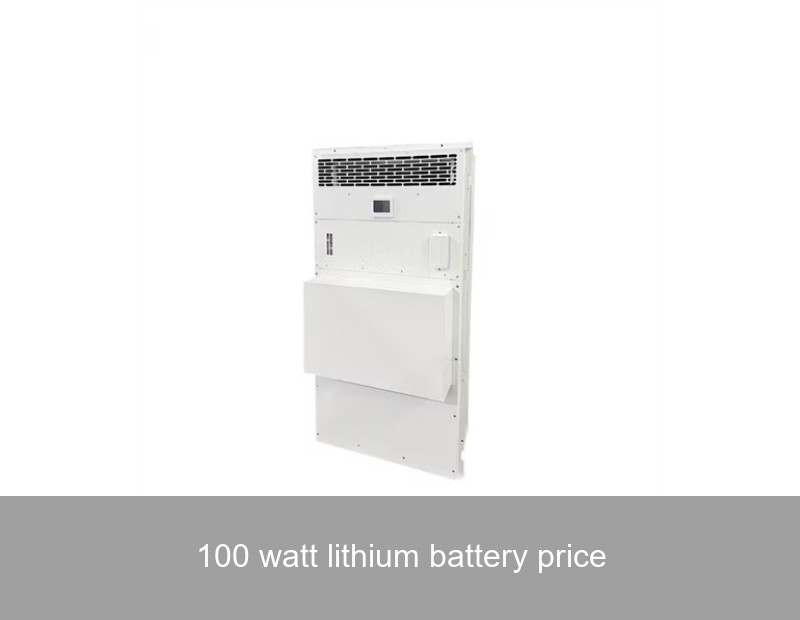
You're planning a small solar setup for your campervan, looking to power a critical sensor on a remote job site, or simply seeking reliable backup for your home internet. In your search, you've likely typed "100 watt lithium battery price" into a search engine and found a dizzying array of numbers, from suspiciously cheap to surprisingly expensive. If you're feeling confused, you're not alone. The quoted price is often just the tip of the iceberg. As a specialist in renewable energy storage, I see this daily: the real cost isn't just the initial purchase; it's the value, safety, and performance you get over the battery's entire life. Let's peel back the layers and understand what you're truly paying for.
The Real Price Breakdown: It's More Than Just a Number
When you see a price tag for a 100-watt-hour (Wh) lithium battery—often marketed as a "100W" battery—it's crucial to understand what's included (and what's missing). A 100Wh battery can theoretically deliver 100 watts of power for one hour, or 10 watts for 10 hours. This capacity is perfect for small, off-grid applications.
The stark price differences you encounter are primarily driven by these core factors:
- Battery Chemistry (LiFePO4 vs. NMC): This is the biggest differentiator. Many budget options use Lithium Nickel Manganese Cobalt Oxide (NMC). They are lighter and have a slightly higher energy density but often compromise on cycle life and thermal stability. The premium choice, and what we at Highjoule primarily use in our compact systems, is Lithium Iron Phosphate (LiFePO4). While it might have a higher initial cost, LiFePO4 batteries boast a lifespan of 3,000-5,000 cycles, are inherently safer, and perform better in a wider temperature range. You're paying for decades of reliable service, not just a few years.
- Build Quality & Battery Management System (BMS): The BMS is the brain of the battery. A cheap BMS can lead to overcharging, deep discharge, and overheating—all of which are safety hazards and will drastically shorten battery life. A high-quality BMS with cell balancing, temperature monitoring, and communication protocols (like Bluetooth for monitoring) is a non-negotiable for safety and longevity, and it's a standard feature in Highjoule's residential and commercial storage systems.
- Brand Reputation & Warranty: A reputable brand like Highjoule, with nearly two decades of experience, stands behind its products with robust warranties and technical support. That "too-good-to-be-true" price from an unknown seller often comes with zero after-sales service, leaving you stranded if issues arise.
- Certifications & Safety Standards: For installation in homes, RVs, or commercial spaces, certifications like UL 9540 (for energy storage systems) in the US or CE in Europe are critical. They ensure the product has passed rigorous safety tests. This compliance adds to the cost but is essential for your peace of mind.

Image Source: Unsplash (Representative image of advanced battery technology)
Understanding the Price Range
| Battery Type / Features | Typical Price Range (USD/EUR) | What You're Likely Getting |
|---|---|---|
| Budget, Generic Brand (NMC) | $50 - $120 | Basic BMS, limited cycle life (~500-800 cycles), minimal safety certifications, short or no warranty. |
| Mid-Range, Known Brand (LiFePO4) | $130 - $250 | Decent LiFePO4 cells, functional BMS, basic certifications, 1-3 year warranty. |
| Premium, Integrated Solution (LiFePO4) | $250 - $400+ | High-grade LiFePO4 cells (like those in Highjoule systems), advanced BMS with monitoring, full safety certifications (UL/CE), integrated design for easy expansion, 5-10 year warranty, and professional support. |
Beyond Price: The True Value of a Quality 100W Lithium Battery
Let's talk about total cost of ownership. Imagine two batteries: Battery A costs $100 and lasts 2 years (approx. 700 cycles). Battery B costs $300 and lasts 10 years (approx. 3,500 cycles). Over a decade, you'd need to buy five of Battery A, spending $500 and creating more waste, while Battery B costs $300 and provides consistent, worry-free performance. The "cheaper" option becomes far more expensive in the long run.
Furthermore, a high-quality battery from a provider like Highjoule is never just an isolated component. It's part of an ecosystem. It's designed to seamlessly integrate with solar charge controllers, inverters, and monitoring platforms. This interoperability ensures optimal efficiency and protects your investment in other equipment. For instance, our Highjoule H-Cube Modular Home Battery system starts with a scalable base unit and can be expanded module by module. While a single 1kWh module is larger than a simple 100Wh pack, the principle is the same: you're investing in a platform that grows with your needs, from securing a sump pump to eventually powering your entire home's critical loads.
A Real-World Case Study: The Off-Grid Cabin in Colorado
Let's ground this with a real example. A client in the Rocky Mountains needed to power lights, a small fridge, and communication devices in a remote cabin. Their initial search led them to a low-cost 100Ah lead-acid setup (roughly 1.2kWh usable). It failed within 18 months due to deep discharge and cold temperatures, requiring a full $300 replacement.
We proposed a compact, Highjoule LiFePO4-based microgrid starter kit with 2kWh of usable capacity. The initial investment was higher at around $1,800 for batteries, a compatible inverter, and solar controller. However, the data tells the real story:
- Lifespan: The lead-acid system offered ~500 deep cycles. The Highjoule LiFePO4 solution is rated for over 4,000 cycles.
- Efficiency: Lead-acid is about 80% efficient (losing 20% of solar energy to heat). LiFePO4 is over 95% efficient.
- Maintenance & Replacement Cost: Over a projected 10-year period, the lead-acid system would require 4-5 replacements, totaling ~$1,500 in batteries alone, plus labor. The LiFePO4 system has a 10-year warranty and expects minimal capacity loss.
Within three years, the total cost of ownership for the LiFePO4 system became lower. More importantly, the client has had zero downtime, can monitor the system remotely via an app, and has a solution that can easily add more solar panels and battery modules in the future. This case perfectly illustrates why focusing solely on the "100 watt lithium battery price" is a short-sighted strategy.

Image Source: Unsplash (Representative image of an off-grid solar application)
Smart Solutions for Your Energy Needs
At Highjoule, we understand that a 100Wh battery is often a building block in a larger energy puzzle. Whether you're a DIY enthusiast or a business looking for a reliable backup, our philosophy is to provide intelligent, scalable, and safe storage solutions.
For smaller-scale needs that might start with a concept like a 100W battery, our H-Power Portable and Mobile Series offers robust, certified LiFePO4 power stations perfect for camping, tailgating, or as a starter kit for a shed. They come with integrated high-quality inverters, MPPT solar charge controllers, and our proprietary BMS for complete peace of mind.
For larger residential and commercial applications, our modular systems like the H-Cube allow you to start with what you need and expand capacity as your energy independence goals grow. These systems are backed by our global network of certified installers and 24/7 system monitoring platform, ensuring you get the most out of your investment for decades. You can learn more about the science behind this longevity from trusted sources like the U.S. Department of Energy's resources on lithium-ion safety.
Making the Right Choice for Your Project
So, before you buy based on the lowest "100 watt lithium battery price," ask yourself and your supplier these key questions:
- What is the specific battery chemistry (LiFePO4 is the gold standard for stationary storage)?
- What safety certifications (UL, CE, UN38.3) does it hold for my region?
- What is the warranty in years and cycle life? (A 5-year/3,500-cycle warranty is meaningful).
- Can it be monitored and managed easily? Does it integrate with my other equipment?
- Does the provider offer technical support and have a proven track record?
Choosing the right energy storage is an investment in reliability, safety, and sustainability. It's about powering your adventures, securing your business operations, or protecting your home without compromise.
What's the one critical device or system in your life that you could never afford to have lose power, and how might a truly reliable energy storage solution change your approach to that risk?
 Inquiry
 Online Chat