


Understanding the Total 100 Acre Solar Farm Cost: A Comprehensive Breakdown
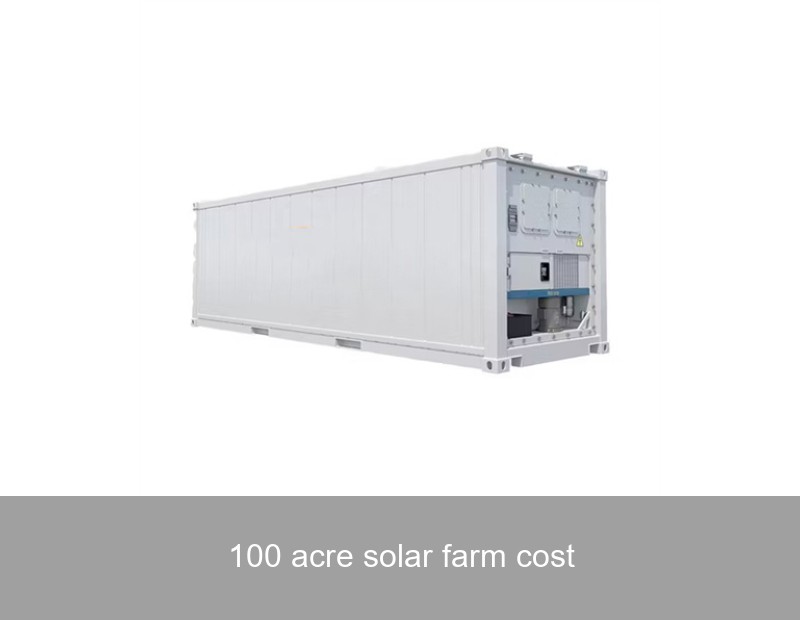
So, you're considering a 100-acre solar farm. It's an exciting venture, promising clean energy and long-term returns. But the first question that looms large is: what is the actual 100 acre solar farm cost? The answer isn't a single number but a detailed equation involving technology, terrain, and intelligent system design. As a global leader in advanced energy storage since 2005, Highjoule works alongside developers every day, and we know that the true cost extends far beyond just panels and land.
Table of Contents
Key Components of a 100 Acre Solar Farm Cost
Think of the cost as layers. The solar panels themselves are crucial, but they're just the beginning. A robust, bankable project requires careful investment in several areas:
- Solar Photovoltaic (PV) Modules: Typically 40-50% of the total cost. Technology choice (monocrystalline, bifacial) impacts efficiency and price.
- Balance of System (BOS): This includes inverters, mounting structures, wiring, combiner boxes, and transformers.
- Soft Costs: Often underestimated. These are permits, engineering studies, interconnection fees, legal work, and financing costs.
- Labor & Construction: Site preparation, civil works, installation, and electrical work. Terrain complexity (sloped vs. flat) heavily influences this.
- The Critical Modern Add-On: Grid-Scale Battery Storage. While an additional upfront cost, integrating a Battery Energy Storage System (BESS) is increasingly standard. It transforms a solar farm from an intermittent generator into a reliable, dispatchable asset, unlocking new revenue streams and stabilizing the grid.
The Numbers: A Detailed Cost Breakdown
Let's translate those components into figures. For a utility-scale project in the US or Europe, costs are usually measured in dollars per watt (DC) or total installed cost. A 100-acre site can typically host approximately 15-20 Megawatts (MW) of solar capacity, depending on panel density and layout.
| Cost Component | Estimated Cost per Watt (USD) | Estimated Range for a 15 MW System (USD) | Notes |
|---|---|---|---|
| PV Modules | $0.25 - $0.40 | $3.75M - $6.0M | Prices fluctuate with global supply and technology. |
| Balance of System (Hardware) | $0.20 - $0.30 | $3.0M - $4.5M | Inverters, mounting, wiring. |
| Labor & Construction | $0.15 - $0.25 | $2.25M - $3.75M | Highly site-dependent. |
| Soft Costs | $0.15 - $0.30 | $2.25M - $4.5M | Permitting, interconnection, engineering. |
| Total Solar-Only Cost | $0.75 - $1.25 | $11.25M - $18.75M | Before storage. Median ~$1.00/W = ~$15M total. |
| + Battery Storage (BESS) Add-on | $0.50 - $1.00* | $7.5M - $15M* | *For a 4-hour 15 MW/60 MWh system. Adds significant value. |
Sources: Data synthesized from NREL's Annual Technology Baseline 2023 and market analysis. Costs are pre-ITC/PTC incentives.

Image: A utility-scale solar farm. Integrating storage from the design phase optimizes land use and infrastructure. Credit: Unsplash
The Game Changer: How Battery Storage Affects Cost & Revenue
Why would you consider adding millions to your upfront 100 acre solar farm cost? The financial logic is compelling. A solar-only farm generates power only when the sun shines, often flooding the grid at midday when prices can be low. Adding a BESS allows you to store excess energy and sell it during high-demand, high-price evening peaks. This isn't just theory; it's a fundamental shift in project economics.
This is where Highjoule's expertise becomes critical. Our GridMaster BESS platform is engineered for utility-scale applications. We don't just provide containerized batteries; we deliver an intelligent, integrated system with advanced energy management software. Our technology ensures maximum cycle life, safety, and seamless integration with your solar asset, turning stored sunlight into a predictable, high-value commodity. For a 100-acre farm, this can mean the difference between a good and a stellar internal rate of return (IRR).
Real-World Insight: A 100-Acre Project in Texas
Let's look at the ERCOT market in Texas, USA. A developer built a 16 MW solar farm on ~105 acres. The initial solar-only cost was approximately $16 million. They later retrofitted a 4 MW / 16 MWh battery system at an added cost of about $7 million.
- Solar-Only Revenue: Reliant on daytime Power Purchase Agreement (PPA) prices, averaging ~$30/MWh.
- Solar-Plus-Storage Revenue: By charging batteries at midday and discharging during the 6-8 PM peak, they captured prices often exceeding $120/MWh. The system also provided critical ancillary grid services.
- Result: The added storage increased total project revenue by an estimated 35-40%, paying back the storage addition in under 5 years and dramatically improving the project's long-term bankability.
Designing with storage from the outset, as Highjoule's engineering team advises, can reduce integration costs and optimize the entire site's layout and electrical design.
Beyond Initial Cost: Maximizing Your Investment
Smart developers look at Levelized Cost of Energy (LCOE) and lifetime value. Higher-quality, durable components might have a higher capex but lower operating costs and longer life. This is a core principle at Highjoule. Our storage systems are built with industry-leading thermal management and cell chemistry to ensure performance degradation is minimized over a 20+ year lifespan, protecting your asset's value.
Furthermore, consider operational efficiency. Our Highjoule Energy Management System (HEMS) uses AI-driven forecasting to optimize every charge and discharge cycle, maximizing revenue based on real-time market signals and weather data. This intelligent layer ensures your significant investment in both solar and storage works as hard as possible, every single day.

Image: Advanced energy management software, like Highjoule's HEMS, is key to optimizing storage revenue. Credit: Unsplash
Is Your Solar Farm Project Financially Viable?
We've moved beyond the simple question of "100 acre solar farm cost." The modern benchmark is "the cost and value of a 100-acre solar-and-storage farm." The initial capital outlay is significant, but the evolving energy landscape rewards flexibility and reliability. With incentives like the U.S. Investment Tax Credit (ITC) for standalone storage now available, the financial case for pairing solar with a high-performance BESS is stronger than ever.
What specific grid market opportunities (peak shaving, frequency regulation, capacity markets) in your target region could make storage the most profitable component of your entire project? Highjoule's technical experts specialize in modeling these scenarios to provide a clear, data-driven picture of your project's potential.
 Inquiry
 Online Chat